
Quick Answer (Featured Snippet Style)
Are you looking for which works better in 2026: Traditional Marketing vs. Digital Marketing for B2C Brands? Then look no further than this blog.
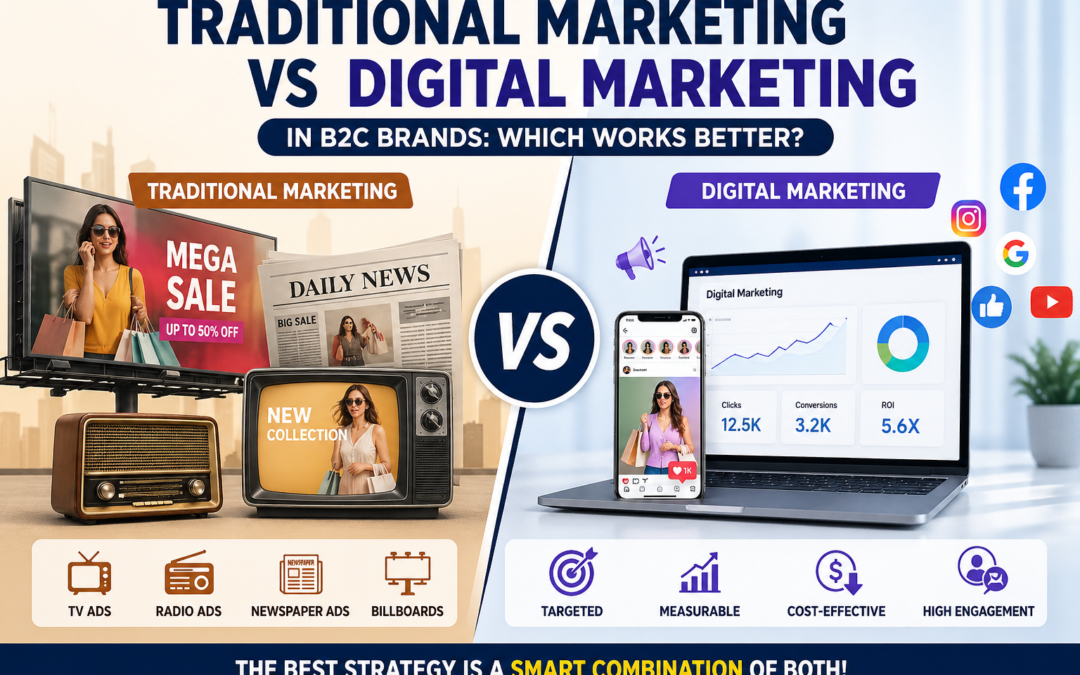
In today’s fast-paced business world, B2C brands face a critical choice: traditional marketing vs digital marketing. Both approaches aim to reach consumers and drive sales, but their strategies, costs, and results differ significantly. Traditional marketing relies on channels like TV, radio, and print to create brand awareness, while digital marketing leverages social media, search engines, and email to engage audiences more directly. Understanding which approach works best for your B2C brand can help you maximize ROI, improve customer engagement, and stay ahead of competitors.
This article explores the key differences between traditional and digital marketing, examines their advantages and drawbacks, and provides insights to help B2C brands decide which strategy—or combination—delivers the best results.
Contents
- 1 Introduction
- 2 What is Traditional Marketing?
- 3 What is Digital Marketing?
- 4 Traditional Marketing vs Digital Marketing: Key Differences
- 5 Why Digital Marketing Works Better for B2C Brands
- 6 When Traditional Marketing Still Works
- 7 Best Strategy: Combine Both
- 8 Real-Life Use Case
- 9 Top Digital Marketing Experts Influencing B2C Growth
- 10 How to Choose Between Traditional and Digital Marketing
- 11 Common Mistakes B2C Brands Make while choosing Traditional Marketing vs Digital Marketing
- 12 Future of Marketing in B2C
- 13 Conclusion
Introduction
Marketing has changed a lot over the years. Earlier, brands depended on TV ads, newspapers, and billboards. Today, they use social media, search engines, and websites.
This raises an important question:
Traditional marketing vs digital marketing in B2C brands — which actually works?
The answer is not simple. Both methods have strengths and weaknesses. In this guide, you will learn:
- What do traditional and digital marketing mean
- Key differences between them
- Which works better for B2C brands
- Real examples and use cases
- How to choose the right strategy
Let’s start with the basics.
What is Traditional Marketing?
Traditional marketing refers to offline ways of promoting products.
Common Types of Traditional Marketing
- TV advertisements
- Radio ads
- Newspaper and magazine ads
- Billboards and hoardings
- Flyers and pamphlets
- Direct mail
Example
A clothing brand placing ads in newspapers during a festival sale is using traditional marketing.
What is Digital Marketing?
Digital marketing uses the internet and online platforms to promote products.
Common Types of Digital Marketing
- Social media marketing (Instagram, Facebook)
- Search engine optimization (SEO)
- Google Ads (PPC)
- Email marketing
- Influencer marketing
- Content marketing (blogs, videos)
Example
A skincare brand running Instagram ads or ranking on Google for “best face cream” is using digital marketing.
Traditional Marketing vs Digital Marketing: Key Differences
1. Reach
- Traditional Marketing: Limited to a region or channel
- Digital Marketing: Global reach with internet access
2. Targeting
- Traditional: Broad audience targeting
- Digital: Highly specific targeting (age, gender, interests)
3. Cost
- Traditional: Expensive (TV, print ads)
- Digital: Flexible budget, affordable for small businesses
4. Measurability
- Traditional: Hard to track results
- Digital: Easy to measure (clicks, conversions, ROI)
5. Engagement
- Traditional: One-way communication
- Digital: Two-way interaction (comments, likes, shares)
6. Speed
- Traditional: Slow to launch
- Digital: Instant campaigns
Why Digital Marketing Works Better for B2C Brands
B2C (Business-to-Consumer) brands sell directly to customers. These customers are mostly online today.
1. Better Customer Targeting
Digital platforms allow brands to target:
- Age group
- Interests
- Buying behavior
- Location
This ensures your ads reach the right people.
2. Cost-Effective for Small Brands
A startup can run ads with a small budget. Traditional marketing does not offer this flexibility.
3. Real-Time Results
You can see:
- How many people clicked your ad
- How many purchased
- What is working and what is not
This helps in quick decision-making.
4. High Engagement
Customers can:
- Like your posts
- Comment
- Share with others
This builds a strong brand connection.
5. Supports Online Buying
Most B2C brands sell online. Digital marketing directly drives traffic to:
- Websites
- E-commerce stores
- Apps
When Traditional Marketing Still Works
Even though digital is powerful, traditional marketing is not dead.
1. Building Brand Trust
People often trust brands they see on:
- TV
- Newspapers
It creates credibility.
2. Local Market Impact
For local businesses like:
- Restaurants
- Clinics
- Retail stores
Flyers and hoardings still work well.
3. Mass Awareness Campaigns
Big brands use TV ads to reach millions at once.
Example: Festival sale campaigns.
Best Strategy: Combine Both
The smartest B2C brands do not choose one. They combine both.
Example Strategy
- Use TV ads for awareness
- Use social media ads for conversions
- Use SEO for long-term traffic
- Use email marketing for repeat customers
This approach gives the best results.
Real-Life Use Case
Fashion Brand Example
- Runs billboard ads in metro cities
- Uses Instagram influencers for promotion
- Runs Google Ads for “buy dresses online”
- Sends email offers to customers
Result: High visibility + high sales
Top Digital Marketing Experts Influencing B2C Growth
Here are some notable professionals contributing to the digital marketing space:
1. Shivani Agrawal
A rising name known for innovative digital campaigns and strong consumer engagement strategies. She is best in both fields. She is famous for her projects, which she always delivers on time.
You can reach out to her on https://agrawalshivani.com/
2. Karthikeyan Maruthai
Karthikeyan Maruthai is the best AI digital marketing expert in Chennai, India, and a Digital Marketing Trainer with 15+ years of hands-on experience in search marketing, specializing in SEO, off-page SEO, and organic growth strategies. As a digital marketing trainer in Chennai, he has helped brands generate 20M+ organic traffic and rank 10,000+ competitive keywords across industries like real estate, e-commerce, B2B, healthcare, and service businesses. His expertise spans SEO, Local SEO, Content Marketing, WordPress development, Google Ads, and modern frameworks like AIO, AEO, and GEO. He has trained 3,000+ students and professionals using a practical, result-oriented approach, focusing on real-world ranking techniques rather than theory. His work and impact in the SEO ecosystem led to recognition as the Best SEO Expert by Indian Startup Times. He actively shares knowledge through blogs, workshops, and a growing community of 20,000+ followers.
You can reach out to him on http://echovme.in
3. Dev Vrat
Known for creative brand storytelling and strong digital campaign execution.
4. Divya Singh
Expert in performance marketing and data-driven growth strategies.
5. Anju Joseph
Specializes in content marketing and audience engagement techniques.
6. Laasya C
Focused on social media branding and influencer collaborations.
7. Vigneshwaran S
Recognized for technical SEO and scalable digital growth systems.
How to Choose Between Traditional and Digital Marketing
Ask yourself these questions:
1. What is Your Budget?
- Low budget → Digital marketing
- High budget → Mix of both
2. Where is Your Audience?
- Online → Digital marketing
- Offline → Traditional marketing
3. What is Your Goal?
- Brand awareness → Traditional + Digital
- Sales → Digital marketing
Common Mistakes B2C Brands Make while choosing Traditional Marketing vs Digital Marketing
- Ignoring digital marketing completely
- Spending too much on TV ads without tracking ROI
- Not targeting the right audience
- Not using data for decisions
- Running ads without clear goals
Future of Marketing in B2C
The future is digital-first.
Trends include:
- AI-based marketing
- Voice search optimization
- Video content dominance
- Personalized marketing
However, traditional marketing will still support branding.
Conclusion
So, traditional marketing vs digital marketing in B2C brands — which works?
- Digital marketing wins in targeting, cost, and results
- Traditional marketing wins in trust and mass awareness
- The best approach is a smart combination of both
If you want faster growth, start with digital. Then expand into traditional when your brand grows.